Oct 10, 2025
The Problem With “Big AI” in Hospitality
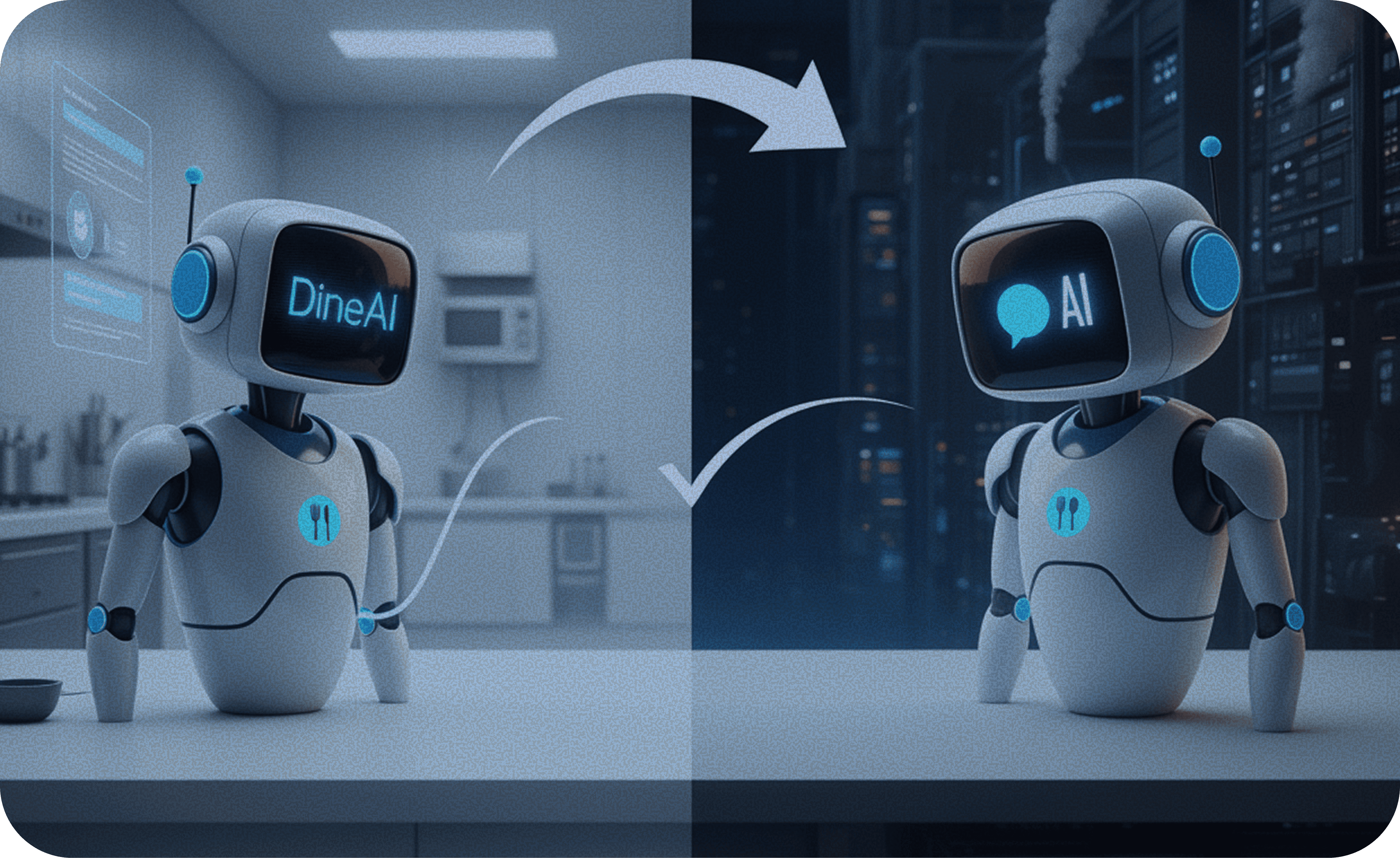
Enterprise AI often confuses sophistication with usability. Many of today’s so-called “smart” systems bury restaurants under dashboards, APIs, and configuration screens— forgetting that restaurants aren’t software companies. They’re living ecosystems built on pace and personality. Slang AI is one of the most technically ambitious players in the voice automation space. Its platform powers enterprise-level voice ordering and multi-site deployments. But its strength—complex, highly configurable architecture—is also what makes it cumbersome for most restaurants to adopt. DineAI takes a fundamentally different path. Its approach is lean, vertical, and focused on one thing: making restaurant phone lines feel effortless.
Focused Design vs. Feature Density
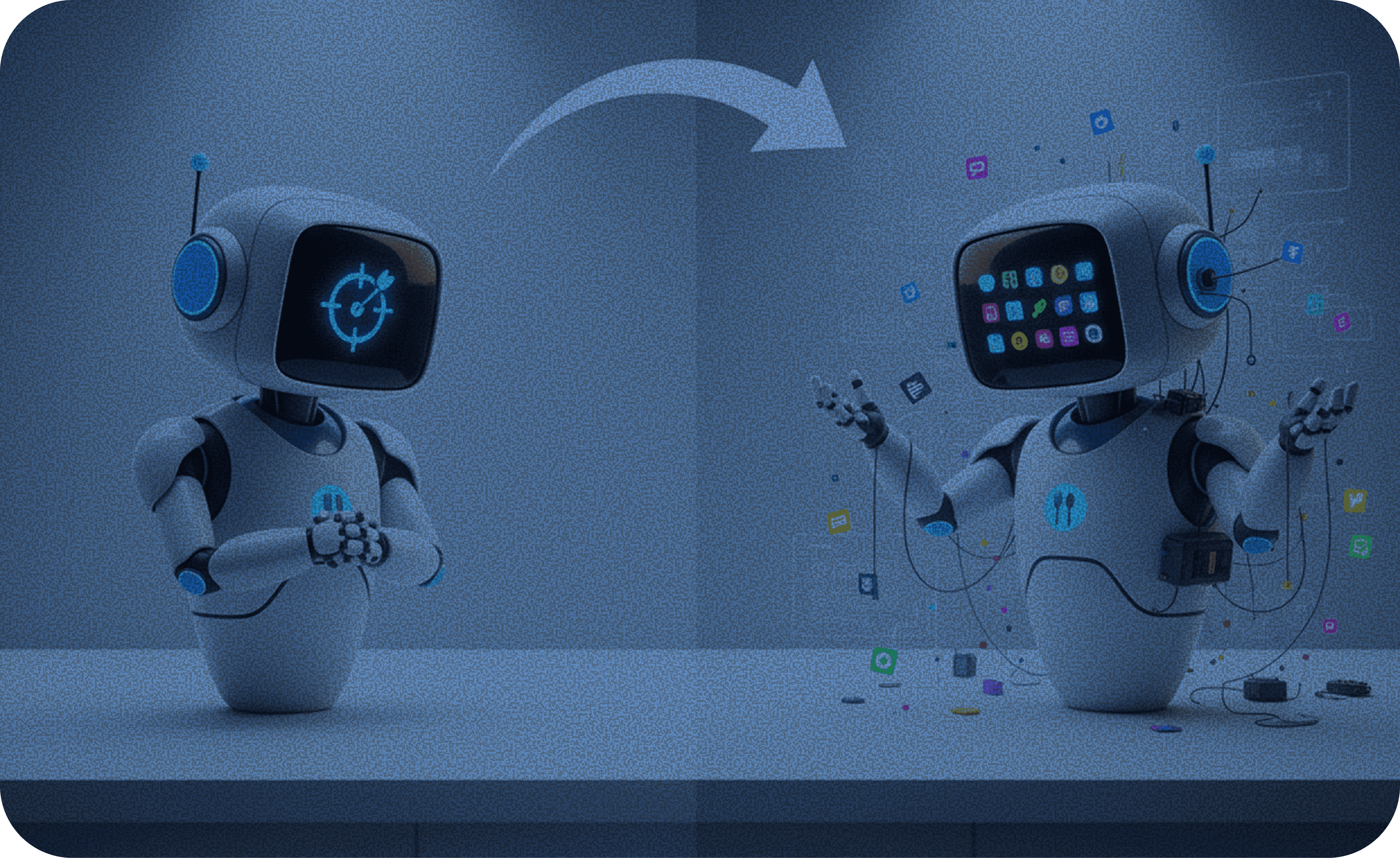
Slang AI’s platform attempts to be everything: a marketing engine, an ordering system, a customer-insight tool. For large chains with in-house tech teams, that breadth can be appealing. For independent or midsized restaurants, it becomes noise. DineAI trims the excess. Its product philosophy mirrors that of hospitality itself—simple, precise, and human. The interface offers only what matters: an AI receptionist named Sofie, real-time call visibility, and instant integration with existing systems. Simplicity here isn’t a limitation; it’s the strategy.
Deployment in Hours, Not Sprints
Implementing Slang AI can feel like onboarding an entire department. It involves coordination between engineers, IT teams, and vendor support—often taking weeks before the first call goes live. DineAI deploys within hours. The onboarding team handles the connection to a restaurant’s POS or CRM, verifies call routing, and Sofie begins answering that same day. There’s no software training, no technical dependencies, and no waiting period. Restaurants shouldn’t have to endure a development cycle just to stop missing calls.
Precision Over Abstraction
Where Slang AI excels in generalized voice intent detection, DineAI specializes in context. Sofie doesn’t just transcribe—she understands. She knows the difference between “table for four” and “party of four,” between “pickup at 8” and “pickup for eight.” Her responses are shaped by hospitality logic rather than syntax recognition. That’s a small linguistic distinction, but in customer experience, it’s everything
Transparent Pricing vs. Tiered Enterprise Contracts
Slang AI operates under enterprise pricing models, often quoting per-location fees or requiring volume commitments. DineAI’s pricing is clear and direct:
• Starter – $99 USD/month for independent venues.
• Growth – $399 USD/month for busier, multi-location restaurants.
• Premium – $799 USD/month for high-volume groups.
Every plan includes 24/7 availability, call logging, analytics, and integration support. There are no add-ons, no hidden licensing, and no surprise invoices.
When Speed Becomes the Selling Point
In voice automation, response time defines credibility. Slang’s architecture is built for data depth, but that complexity can slow live performance. DineAI’s stack prioritizes millisecond-level response and conversational naturalness, ensuring Sofie never pauses long enough for a caller to realize she’s AI. This responsiveness is what makes her effective—and what keeps guests engaged long enough to complete bookings or orders.
The Performance Contrast
Capability | Slang AI | DineAI |
|---|---|---|
Target Market | Enterprise chains | Restaurants of any size |
Setup Time | Weeks | Hours |
Voice Model | Generic enterprise | Hospitality-tuned (Sofie) |
Analytics | Multi-system data layer | Direct restaurant dashboard |
POS/CRM Integration | Custom build | Native |
Pricing | Custom enterprise | Transparent ($99–$799) |
24/7 Service | Add-on | Included |
The Beauty of Restraint
Technology doesn’t need to be overwhelming to be intelligent. DineAI’s strength lies in what it chooses not to include: unnecessary control panels, enterprise contracts, or heavy customization layers. By focusing entirely on restaurants, DineAI delivers more value with less complexity. It’s the rare case where simplicity isn’t just user-friendly—it’s commercially strategic. In a market crowded by overengineered solutions, DineAI represents a shift back to clarity. It’s the platform that understands what restaurants actually need: performance that’s invisible, reliability that’s constant, and an AI voice that feels like part of the team.