Sep 15, 2025
The Rise of Voice AI — and the Problem It Created
The global voice AI market is booming. Analysts project it will exceed $30 billion by 2030, fueled by advancements in natural language processing and the widespread adoption of conversational interfaces. From automotive assistants to banking hotlines, voicetechnology has made access effortless.
But as the market expands, a troubling pattern has emerged: most voice AI systems sound the same.
They’re efficient, polite, and thoroughly impersonal. In industries like finance or logistics, that’s acceptable. In hospitality, it’s fatal.
Restaurants don’t just trade in food—they trade in tone, empathy, and human rhythm.That’s where most AI answering bots fail, and where DineAI has quietly changed theconversation.
The One-Size-Fits-All Trap
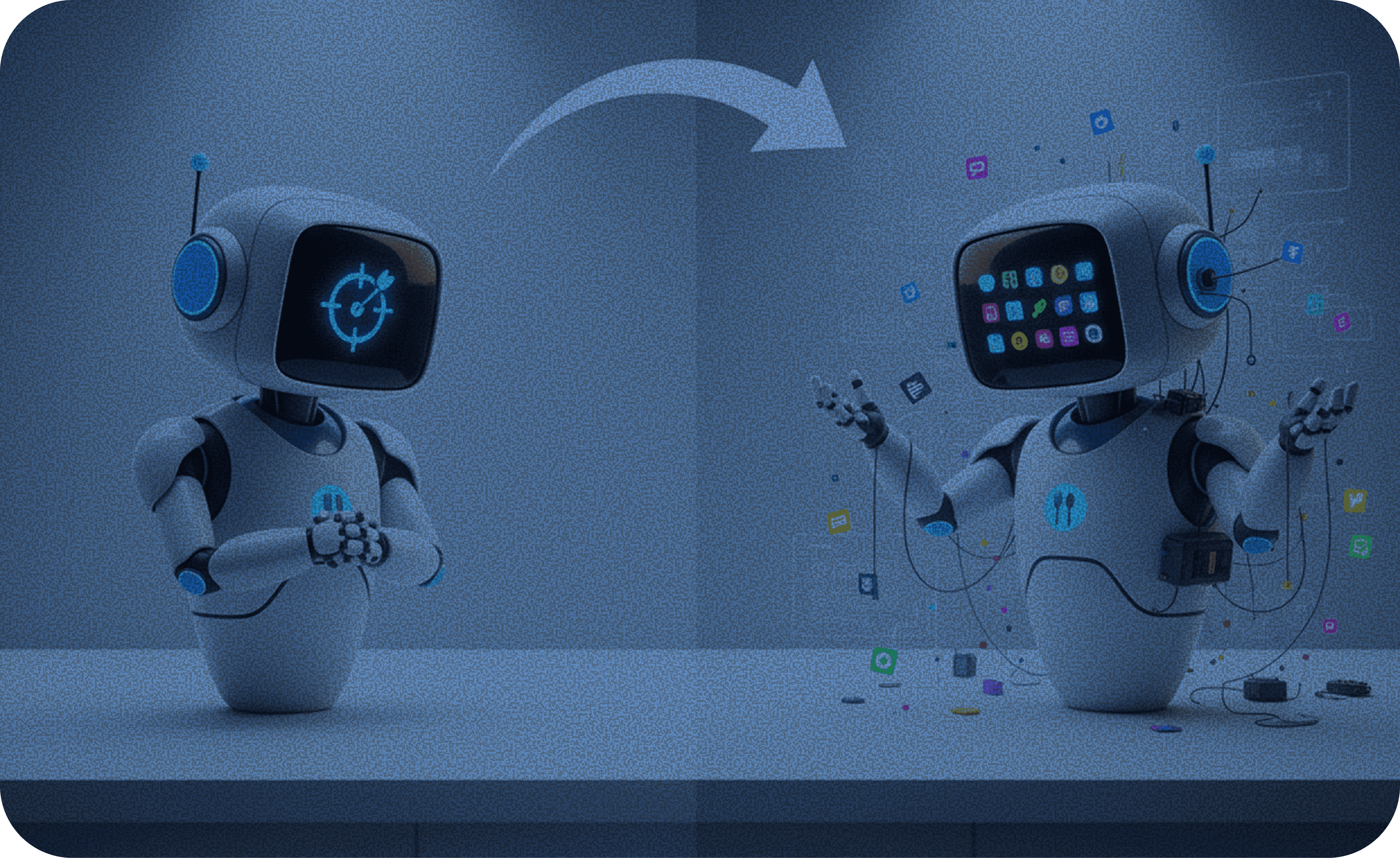
Most AI phone answering systems are built on broad conversational frameworks. They’re designed to handle anything from doctor appointments to car rentals. In technical terms, they’re horizontal platforms—flexible, but shallow.
Ask them about a restaurant’s happy hour or a menu substitution, and they’ll freeze, repeat, or escalate. They lack domain context
DineAI takes the opposite approach. It’s vertical by design—engineered solely for restaurants.
That means its entire intelligence layer is grounded in restaurant logic: reservations, orders, dietary requests, group bookings, cancellations, and follow-ups.
When a guest says, “Can I add one more to that table for 6:30?” Sofie doesn’t need clarification. She already understands the workflow, tone, and next action.
This isn’t general AI with a hospitality skin. It’s purpose-built hospitality AI.
The Myth of “Good Enough” Automation
Many generic call bots claim that automation is about convenience—simply answering calls faster. But that bar is far too low for restaurants.
True automation in hospitality isn’t about response speed; it’s about response quality. Guests expect precision and warmth, not robotic consistency.
DineAI bridges that gap through intent mapping and behavioral tuning. Sofie listens for emotional cues and conversation context, not just word patterns. A guest asking, “Do you guys take big parties?” triggers a different flow than “I need a reservation for 10.” Both sound similar. One is exploratory, one is transactional.
That distinction defines service—and it’s something generic systems simply don’t hear
The Intelligence Behind Sofie
Sofie, DineAI’s AI receptionist, is more than a voice engine. She’s a hybrid system
combining:
• Conversational AI for real-time understanding.
• Restaurant logic modeling for accurate workflows.
• Analytics feedback for continuous optimization.
Every conversation helps refine her knowledge base. Over time, Sofie becomes tuned not only to the industry, but to each restaurant’s culture, phrasing, and brand tone. That adaptive quality positions DineAI at the forefront of the Voice AI 2.0 movement—onedefined not by response automation, but by contextual intelligence.
Why Voice AI Needs Specialization
The first wave of voice AI was about proving technology could talk. The second wave is about proving it can listen. As industries mature, generalized platforms give way to vertical ecosystems. We’ve seen this shift in fintech, healthcare, and now, hospitality.
DineAI represents that transition. Where others build frameworks, DineAI builds fluency.
Its system doesn’t just answer calls—it becomes a natural extension of a restaurant’s brand identity.
Simplicity That Scales
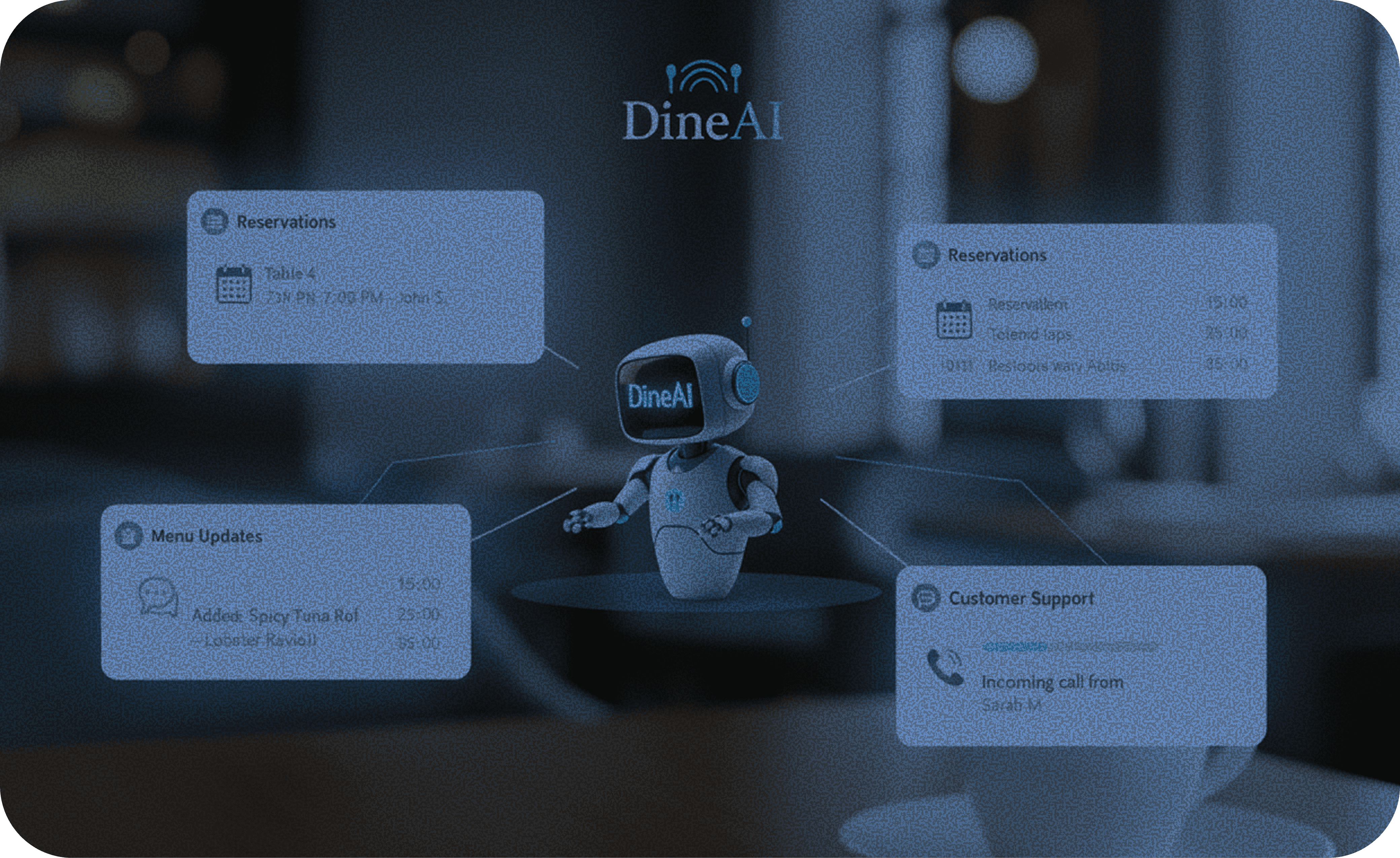
DineAI’s approach to around-the-clock service is elegantly simple. There’s no separate “after-hours mode” or complex scheduling to configure. Sofie automatically adapts to each restaurant’s hours, handling reservations, order inquiries, and general questions continuously.
Even during downtime, all interactions are captured in the dashboard, giving owners a complete view of guest demand outside operational hours. That visibility helps restaurants plan smarter—adjust staffing, extend hours, or introduce new offerings based on real demand data.
Turning Conversations Into Data
Unlike generic bots that log call counts and completion rates, DineAI turns calls into actionable business data. Its analytics dashboard captures:
• Conversion rates from inquiry to reservation.
• Peak calling hours.
• Menu item mentions and recurring questions.
• Cancellations and missed opportunities.
This data feeds directly into decision-making—when to staff up, when to run promotions, and how to personalize service. In essence, DineAI transforms the phone line into an operational insight channel, something no generic system can replicate
The Economics of Purpose
Generic voice bots often market themselves as “affordable automation.” But what they save in cost, they lose in customer experience—and ultimately, revenue.
DineAI’s transparent pricing ($99, $399, $799 USD per month) removes enterprise friction while offering sophistication far beyond budget bots. Each tier includes Sofie’s full voice engine, integrations, and 24/7 coverage.
Restaurants don’t have to choose between automation and service anymore. With DineAI, they get both.alone—it’s about reliability.
Redefining the Industry Standard
As the voice AI sector matures, the companies that will lead it aren’t the ones building for everyone. They’re the ones building for someone.
DineAI’s decision to specialize in restaurants isn’t a limitation—it’s a moat. It has created a model that captures the human core of hospitality while leveraging automation at scale.
In a crowded field of generic systems, DineAI stands as a signal of what’s next: purpose- built AI that doesn’t replace people—it enhances them.
The Takeaway
Generic bots can answer phones. DineAI can answer guests. That’s the difference between automation and hospitality.
By bridging that gap, DineAI hasn’t just joined the voice AI industry—it’s beginning to define it.